Fictional workflow illustration · Reviewed 28 November 2026.
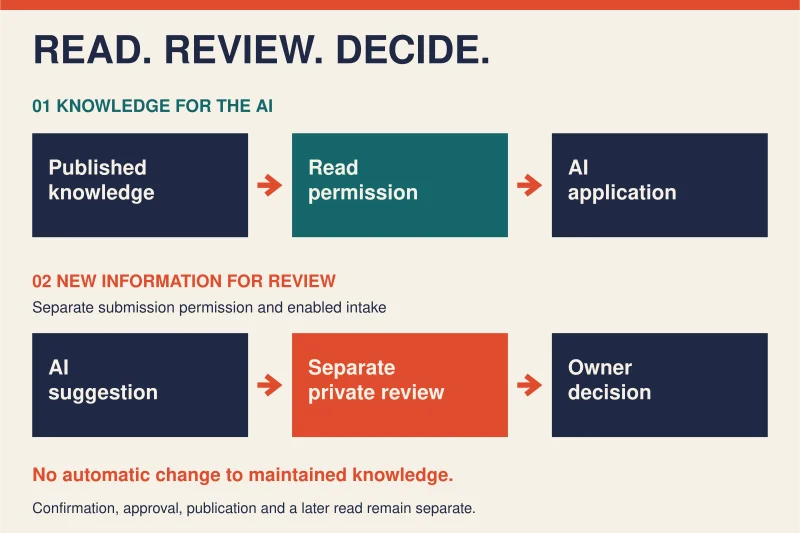
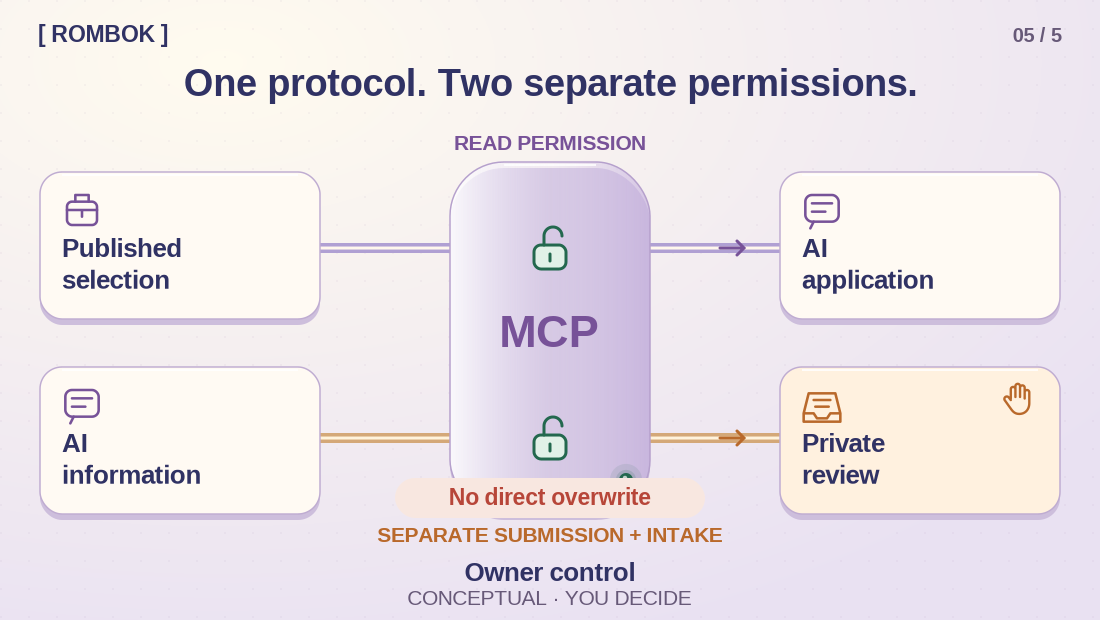
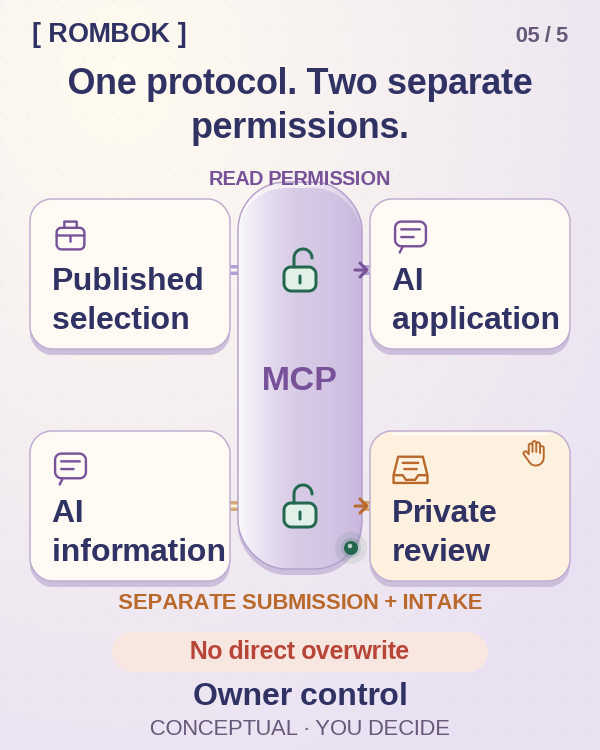
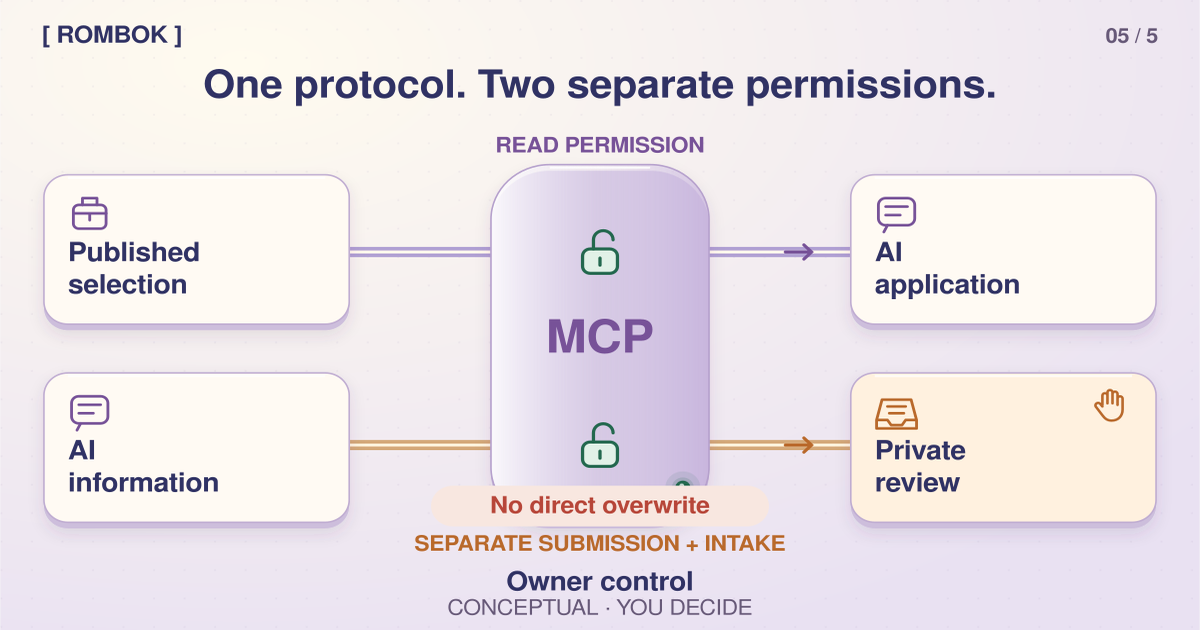
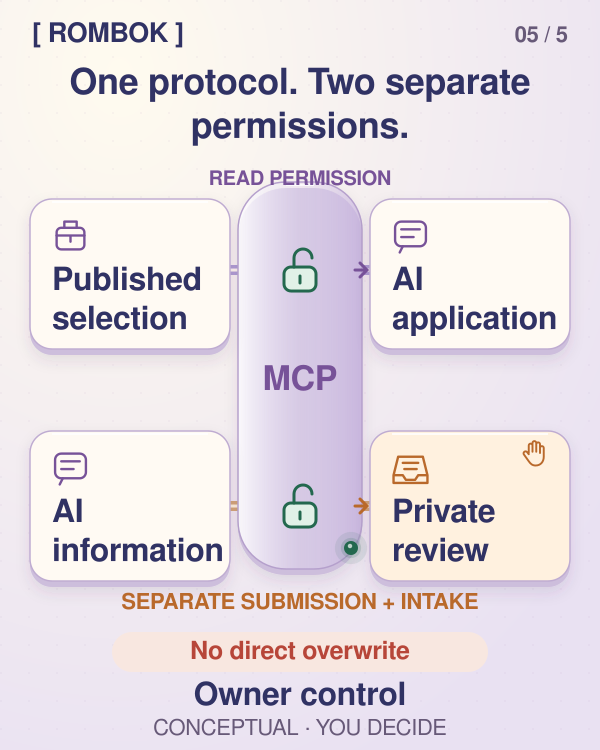
This illustration shows two ways MCP could be used: a supported AI application could retrieve the knowledge made available to its connection, and a separately authorized application could submit information for owner review. The second direction does not let AI overwrite maintained or published knowledge.
What MCP does
The Model Context Protocol provides a way for AI applications to connect with external context and tools. A protocol connection does not decide your business's information policy. The application, server, permissions and supported workflow still determine what can happen. See the official MCP architecture overview.
Direction one is knowledge for an AI task
An owner maintains useful business information and deliberately makes an eligible approved selection available to a suitable connection. The application requests that knowledge through the authorized path.
For a fictional agency, the selection might say: brand identities and websites; small-business clients; agree scope before quoting. The AI application can use the retrieved context to prepare an introduction. The owner still checks the answer.
Direction two is information for the owner's review
Suppose the owner tells the AI application: “Before a discovery call, ask for project goals and timing.” If the application has separate submission permission and intake is enabled, it can send that information to ROMBOK for review.
The owner can reject it or keep it privately. Keeping creates an unconfirmed draft with application origin. It does not update the existing published selection. Confirmation, private approval and publication are separate owner decisions; a later permitted read is needed to retrieve the deliberately updated selection.
Bidirectional does not mean automatic synchronization
Here, bidirectional describes the two illustrated workflows. It does not mean unrestricted database writes, capture of every conversation, automatic approval or permission to act in other business systems. Read permission alone does not acquire submission rights.
Stopping future retrieval is also different from deleting information already received by an outside application.
To prepare your business facts, see the beta preparation page. To follow the decisions, explore how ROMBOK works. For a practical first step, prepare a few business facts.